
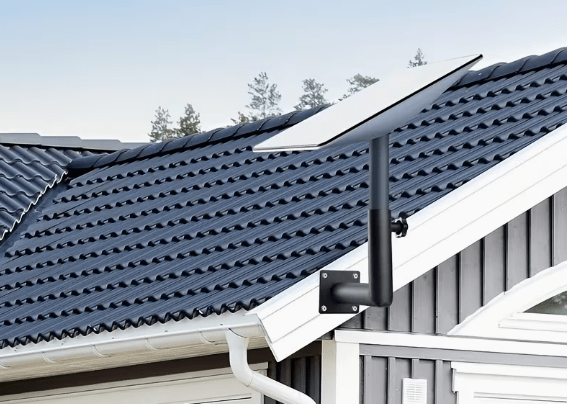
We’ve moved in January this year to another location in our small village in Spain… and once again, though we are just a stone’s throw from houses (on hills) which have fibre, there is no chance of having a pylon fitted to get broadband – and so we continue to use 5G. Angled correctly, the 5G router (which merely feeds a normal router which has WiFi7 WiFi). It has taken 3 months+ but I finally have a hardwired connection into my office (from where I’m typing this blog entry).
It helps that we are line of sight to the 5G mast in the middle of the village to get up to 800 Mbps. I recently realised that as I use the same 5G company for my phone and router, they offer better deals if you have 2 or more SIMs. For 2 SIMs every month I pay around €16 for utterly unlimited data in both cases. That’s not unlimited data with a Fair Use Policy, its unlimited – full stop.

It’s always tempting to look at Starlink because the 5g Mast is not without its problems…. every now and then the village loses power and of course the Mast loses power with it. Starlink is quite cheap for the bottom end domestic version in Spain at around €29 a month, with no up front hardware costs – but bear in mind what they call “free” hardware is Wi-Fi only so you don’t get a router with an Ethernet connection output. You just get a Wi-Fi connection output – I’d be prepared to be it is NOT WiFi 7. Unless you live in a very tiny home, you’re going to have to buy an official adapter so that you can put extenders (or routers) around the house. I need at least three routers in my cave-home.
Right now Starlink have a special offer on three months at €10 a month, then back to the normal €29, which is quite reasonable. All of that sounds good until you look at the speeds. Starlink offers typically around a hundred megabits per second at the lowest rate but then when I look into it more deeply, you are looking at between 30 and 60 megabits per second upload, which is not so good. In fact it is not really good at all. If, like me, you produce the odd video to go to YouTube or you want to send (as against receive) some high-speed data, well forget it at that rate. I’m typically getting up to 800Mbps download and 60-80Mbps upload speeds.
It seems that Starlink are working on this with a view to symmetrical data, same speed up, same speed down, but it hasn’t happened yet. I suspect it will happen in America long before it happens here.